



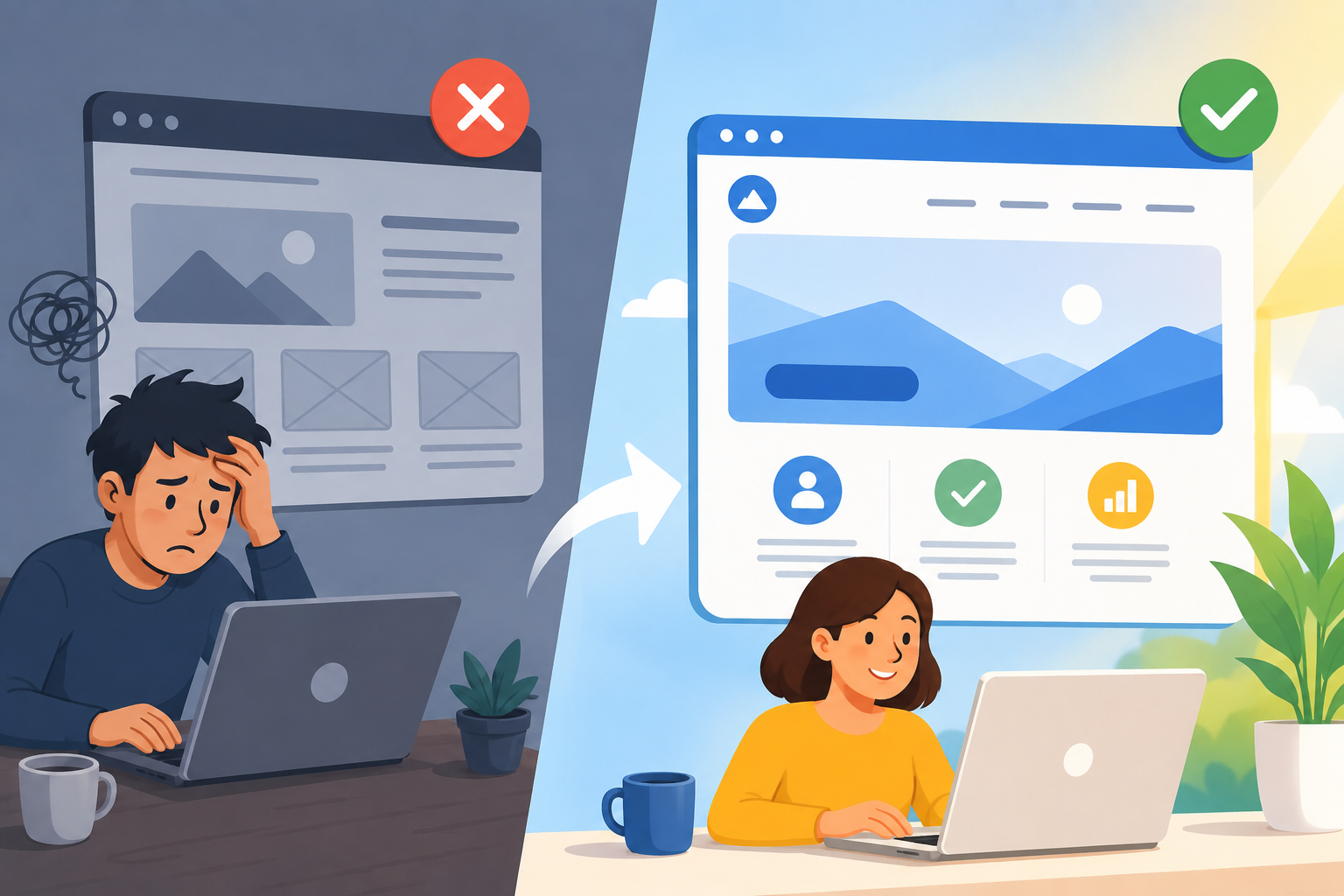
When budgets are tight and technology is changing quickly, building your own business website can feel like a sensible decision. There are now hundreds of website builders and AI-assisted platforms promising to help you create a polished site in a fraction of the usual time and cost.
At first, the process can seem straightforward. You choose a template, add your business details, upload a few images, and publish the site. For a small or temporary project, that may be enough.
The challenge begins when the website needs to do more than simply exist.
A business website has to represent your brand, explain your services, work smoothly on every device, load quickly, support search visibility, protect visitor information, and encourage people to take the next step. When these elements are overlooked, the savings made at the beginning can be lost through missed inquiries, recurring fees, technical problems, and hours spent trying to fix the site.
In this post, we will share four hidden costs of a DIY business website and explain when professional website design services may offer better long-term value.
Four Hidden Costs of Building Your Own Business Website
1. Your Time Becomes Part of the Price
DIY website platforms are often promoted as quick and easy to use. However, the advertised setup time rarely includes everything required to build a complete business website.
You may need to compare templates, organize your pages, write the content, resize images, configure contact forms, adjust the mobile layout, connect analytics, and learn how the platform works. A small formatting issue or broken feature can then take hours to investigate when you are unfamiliar with the system.
The work also continues after the website is published. Content updates, software changes, backups, security checks, product uploads, and performance problems all require attention.
Those hours have a business value. Time spent changing layouts or troubleshooting plugins is time you cannot use to serve customers, manage your team, improve your services, or generate new business.
A low monthly platform fee may look affordable, but the true cost should include the time you and your team spend building and maintaining the site.
2. Design Problems Can Cost You Inquiries
A template can give you a useful starting point, but it does not automatically create a website that is easy to understand or navigate.
Every page still needs thoughtful decisions about layout, spacing, content order, calls to action, mobile behavior, and the information visitors should see first. When these decisions are rushed, the website may look acceptable while still making it difficult for people to take action.
Common problems may include:
- Contact (CTA) buttons that are difficult to find
- Important services buried too far down the page
- Menus with too many choices
- Text that is uncomfortable to read on a phone
- Pages that do not explain the next step
- Forms that are too long or confusing
- Images and design elements that slow the site down
Most visitors will not tell you why they left. They may simply return to the search results and choose another business whose website feels easier to use.
This makes lost opportunities one of the hardest DIY website costs to measure. Even a small number of missed calls, bookings, purchases, or quote requests can eventually exceed the amount saved by building the site yourself.
3. Basic Tools May Limit Performance, SEO, and Growth
A DIY platform may work well while your website needs are simple. As your business grows, you may need stronger booking tools, payment options, customer accounts, reporting, or e-commerce features.
Some platforms charge extra for these additions. Others may limit how much you can customize the design or connect the website with your existing systems. Adding more plugins and apps can also slow the site down or create technical conflicts.
SEO may become harder to manage as well. Site speed, mobile performance, page structure, internal linking, and crawlability all influence how search engines understand your website.
If the platform no longer supports your needs, you may have to rebuild or migrate the site. Moving content, forms, products, tracking tools, and search settings can take time and may lead to extra development costs.
4. Security and Maintenance Can Add Up
A website still needs care after it goes live. Software, plugins, browsers, and security threats continue to change, and problems can appear when updates are missed.
Depending on the platform, you may need to manage:
- Software and plugin updates
- Website backups
- Spam and security protection
- Broken links and contact forms
- User permissions
- Checkout and payment connections
- Recovery after a technical failure
E-commerce websites require even more attention because they handle customer details, orders, payments, and inventory information. A broken form, failed checkout, or security warning can affect inquiries and sales before you realize something is wrong. Fixing the issue later may involve emergency development costs, downtime, and lost customer confidence.
While professional web development cannot remove every risk, it can give your website a stronger technical foundation and a more dependable maintenance plan.
Let Abacus Web Services Build a Website That Supports Your Business
Building your own website is certainly possible. DIY platforms can be useful when you are testing an idea, creating a temporary page, or launching a small project with limited requirements. However, creating a dependable business website takes more time and understanding. You need to think about design, content, mobile responsiveness, speed, search visibility, security, accessibility, integrations, and how the site will support your future growth.
When your main strength lies in managing your business and serving your customers, handing the technical work to an experienced team can be a wise use of your time and budget.
At Abacus Web Services, we provide professional website design shaped around the needs of each business. Our team can support responsive design, technical development, back-end functionality, mobile optimization, and e-commerce features. We also build and support flexible WordPress website development, along with Shopify and e-commerce sites designed to simplify shopping, orders, and product management. So, if you want a professional, secure, and fast-loading website built around your business goals, get in touch with our expert team today.
Frequently Asked Questions About DIY Business Websites
Is It Cheaper to Build Your Own Business Website?
A DIY website usually has a lower initial cost, especially when you only need a few basic pages. Premium features, third-party apps, maintenance, troubleshooting, and the time spent building the site can increase the total cost over time.
Can a DIY Website Rank on Google?
Yes, a DIY website can appear in search results. Its performance will depend on the quality of the content, technical structure, speed, mobile experience, competition, authority, and ongoing SEO work.
When Should You Hire a Professional Web Developer?
Professional support is often useful when your website generates leads or sales, processes payments, requires custom features, connects with other business systems, or needs to grow over time. It may also be worth hiring help when managing the website begins taking too much time away from your business.
Can a Professional Improve an Existing DIY Website?
In many cases, yes. A professional may be able to improve the design, navigation, speed, security, mobile experience, and search setup. When the platform is too restrictive or the technical problems are extensive, rebuilding the site may offer a better long-term result.

0 Comments