




Times are changing quickly, and the way people browse and find information online is changing faster than many businesses expected. A few years ago, most users typed a short search into Google, clicked a few results, and compared websites one by one. Today, the journey is more varied.
People now use zero-click search results, AI summaries, voice search, map results, chat assistants, and AI chat tools and question-based searches to get answers faster. Instead of browsing through several pages, many users now expect the right information to come to them in a shorter and more conversational format.
This is where ideas like NLWeb become important. Microsoft introduced NLWeb as an open project designed to bring natural language interfaces directly to websites. In simple terms, it gives website owners a way to let people ask questions on a site and receive useful answers from that site’s own content.
If you have been hearing conversations about NLWeb but are not sure what it means, this post will help you understand what it is, why it matters, and how it may support businesses as search becomes more conversational.
What is NLWeb?
NLWeb stands for Natural Language Web. It is a Microsoft-backed open project that helps websites offer a conversational interface, allowing users to ask questions in normal language instead of relying only on menus, search bars, filters, or navigation links.
Think of a standard website search box. A user may type “pricing,” “services,” or “website design” and hope the right page appears. With a natural language interface, the user could ask a fuller question, such as “What website design services do you offer for small businesses?” or “Can you help with SEO and AI consulting?”
NLWeb is designed to help websites respond to those kinds of questions using their own content and data. It can work with structured information already found on many websites, including schema markup, RSS feeds, and other organized content formats.
Another important part of NLWeb is its connection with MCP, or Model Context Protocol. MCP helps AI systems and digital agents connect with tools and data through a more standardized interface. In the context of NLWeb, this means a website can become easier for both human visitors and AI agents to query.
The idea is not to replace your website, but to make it easier to talk to.
Benefits of NLWeb for Businesses
NLWeb is still an emerging concept, but it points toward a very practical shift.
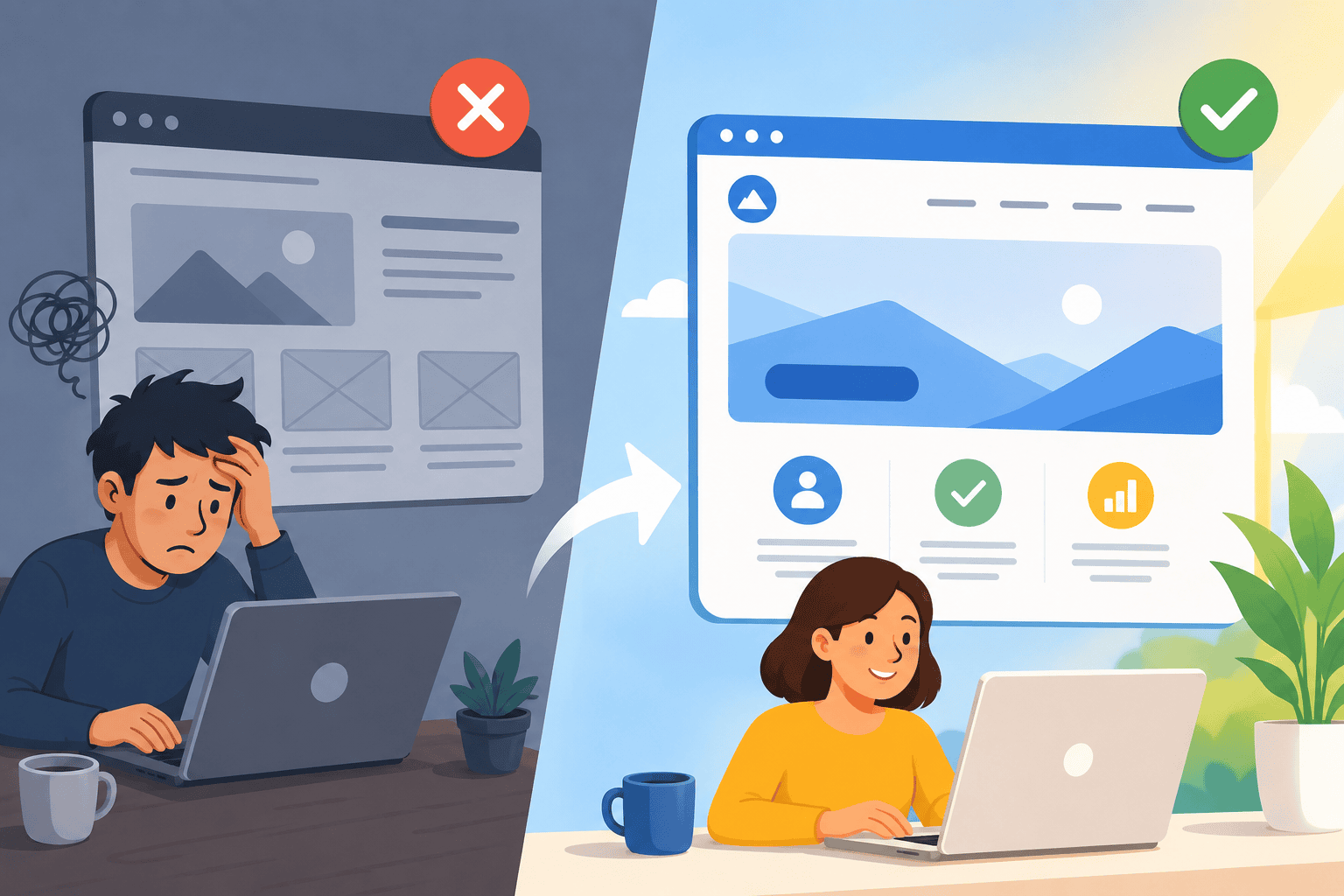
Websites are moving from static pages toward more interactive, answer-led experiences. For businesses, that can bring several benefits:
Better User Experience
Many visitors arrive on a website with a specific question. They may want to know whether a company serves their area, what services are offered, how the process works, or how to get started.
A conversational website can reduce the effort needed to find that information. Instead of clicking through multiple pages or relying on exact keywords in a search box, users can ask a question and receive a direct answer based on the website’s content.
For content-heavy websites, ecommerce sites, service businesses, directories, and local businesses with detailed resources, this can make the experience feel faster, easier, and more useful.
Stronger Content Discovery
Most business websites already contain useful information, but visitors do not always find it. Service pages, FAQs, blog posts, case studies, and support pages may sit in different areas of the site.
NLWeb can help surface information from across a website in response to a user’s question. This may give older content, detailed service pages, and helpful FAQs more value because they can become part of a conversational answer.
More AI-Friendly Website Content
Search is moving toward AI-assisted discovery. That does not mean every website needs to become an AI product, but it does mean content needs to be structured in a way that machines can understand.
NLWeb supports this direction by encouraging websites to use organized, accessible, and well-labeled content. A site with strong headings, clear service information, helpful FAQs, schema markup, and well-maintained pages will be in a better position than a site with thin or scattered content.
Better Support for AI Agents
AI agents are expected to play a bigger role in how people complete tasks online. A user may eventually ask an assistant to compare services, find a provider, check availability, or gather information from different websites.
NLWeb is part of a broader movement toward making websites easier for these agents to interact with. For businesses, this could become important as customers rely more on AI tools to research and make decisions.
How Abacus Web Services Can Help
As search behavior changes, businesses need websites that are easier for both people and AI-driven systems to understand. This does not happen through one tool alone. It requires strong SEO, useful content, technical health, and a clear understanding of how customers search today.
At Abacus Web Services, we help businesses think through this changing digital landscape with support across SEO, content, website design, and AI consulting. Whether you are trying to improve your website content, understand new AI search trends, or prepare your site for more conversational experiences, our team can help you take the next step with confidence.
If you want to understand how ideas like NLWeb may affect your business website, connect with our team today. We can help you explore what matters now, what may be worth preparing for, and how your website can stay easier to find, easier to understand, and easier to use.
FAQs About NLWeb
What is a conversational website?
A conversational website allows users to interact with website content by asking questions in natural language. Instead of only clicking through menus or typing short keywords into a search box, visitors can ask more specific questions and receive answers based on the website’s available content.
How does NLWeb work?
NLWeb helps websites create natural language interfaces using their own content and data. It can work with structured formats such as schema markup and RSS, and it supports MCP so both human users and AI agents can query website information in a more organized way.
Can NLWeb replace search engines?
NLWeb is not meant to replace search engines. It is designed to improve how users and AI agents interact with individual websites. Search engines may still help people discover a business, while NLWeb can help them ask better questions once they are on the site.

0 Comments