




Search engine optimization has been changing almost continuously since Google first became the dominant search engine. Algorithms change, new search features appear, and the way people search evolves. Artificial intelligence is the latest major change, and it is already having a significant impact on how businesses are found online.
AI is now part of the search process itself. At the same time, businesses and SEO professionals are using AI to research topics, analyze search behavior, create and improve content, and identify opportunities. This raises an obvious question. If AI is becoming such an important part of search, can you still do SEO successfully without using it?
The short answer is yes. But AI is becoming an increasingly useful tool for doing SEO more efficiently and understanding a search environment that is becoming more complex.
AI Is Already Part of Search
When we talk about AI and SEO, it is important to separate two different things. There is AI that businesses can use to help with SEO, and there is AI being used by the search engines themselves.
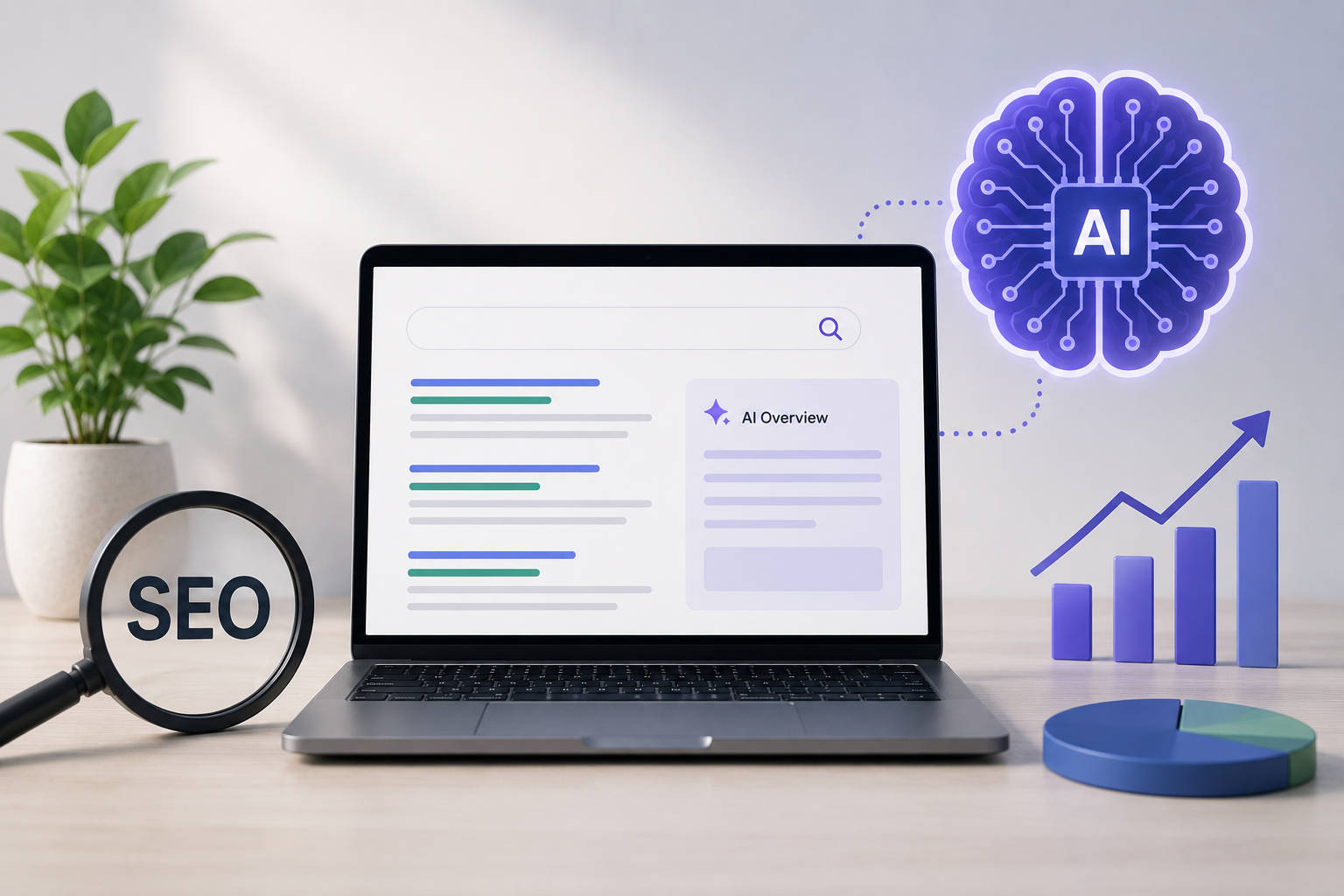
Google has integrated AI into Search through features such as AI Overviews and AI Mode. Instead of always providing a traditional list of website links, Google can generate an answer to a question using information gathered from multiple sources.
That changes the search landscape. A business is no longer competing only for a high position in the traditional search results. Its content may also have an opportunity to be used or referenced when an AI system creates an answer.
This does not mean traditional SEO has become irrelevant. In fact, the opposite is true. Google has specifically stated that its existing SEO best practices remain relevant for its AI search features.
SEO and AI Search Are Closely Connected
There has been a lot of discussion about new terms such as Answer Engine Optimization and Generative Engine Optimization. These generally refer to optimizing content so that it has a better chance of appearing in AI generated answers.
There are differences in how people interact with AI search, but many of the fundamentals are familiar. Search engines still need to find your website, understand its content, determine what the business or page is about, and decide whether the information is useful and trustworthy.
Good site structure, useful content, internal linking, clear page titles, relevant headings, structured data where appropriate, strong technical performance, and a website that can be properly crawled and indexed all remain important.
In other words, optimizing for AI search does not mean abandoning SEO. Strong SEO provides much of the foundation that makes content accessible to AI powered search in the first place.
How AI Can Help With SEO
AI can be extremely useful during the SEO process. It can help research topics, identify related questions, analyze how customers might describe a service, organize information, suggest content ideas, and find gaps in existing website content.
It can also help businesses think beyond a single keyword. Someone searching for a roofing company, attorney, financial advisor, or web designer may ask dozens of different questions before deciding whom to contact. AI tools can help identify those questions and determine where useful content could be added to a website.
This does not mean handing the entire SEO process over to AI. The value comes from combining the speed and analytical capabilities of AI with knowledge of the business, its customers, its market, and its goals.
AI Can Help Create Content, But There Is a Catch
One of the most obvious uses of AI is content creation. A tool can produce a blog article in seconds, which makes it tempting to generate large amounts of website content very quickly.
More content, however, does not automatically mean better SEO.
AI generated content can be repetitive, generic, inaccurate, or remarkably similar to information already available on hundreds of other websites. Publishing large quantities of that type of content simply because it contains relevant keywords is unlikely to be a good long term SEO strategy.
AI works much better as part of the content process. It can assist with research, structure, ideas, editing, and drafts, while the business provides the knowledge, examples, opinions, and experience that make the finished content genuinely useful.
The objective should still be to publish something worth reading.
Can You Still Do SEO Without AI?
Absolutely.
A business can still improve its search visibility by having a technically sound website, understanding what its customers search for, creating useful content, earning authority, optimizing important pages, maintaining its Google Business Profile, and providing a good experience for visitors.
None of those things requires the business to use an AI tool.
A well written article created entirely by a knowledgeable human can perform better than an AI generated article. A carefully optimized service page can outperform dozens of automatically generated pages. Experience and expertise still matter.
What changes is efficiency. An experienced SEO professional using AI appropriately may be able to complete research, analyze information, identify opportunities, and develop ideas much faster than someone doing everything manually.
AI is therefore becoming less of a replacement for SEO and more of an additional tool within the SEO process.
Being Found by AI Is Becoming Part of SEO
There is another reason businesses should pay attention to AI even if they have no intention of using it to create content.
Their customers are using it.
People increasingly ask detailed questions rather than typing a few words into a search box. They may use Google AI features or other AI platforms to compare services, research companies, understand a problem, or decide what questions they should ask before making a purchase.
That means businesses need website content that clearly explains what they do and demonstrates knowledge of the subjects their customers care about.
The goal is no longer simply to rank for a particular phrase. It is to make your website a useful and understandable source of information about your business and your area of expertise.
Our Approach at Abacus Web Services
At Abacus Web Services, we have been working with SEO for many years, long before generative AI became part of everyday search. The fundamentals we have relied on have not suddenly disappeared. Technical SEO, good website structure, relevant content, understanding how customers search, and providing useful information are still important.
What has changed is the range of tools available to us and the places where our clients can potentially be found. We now use AI where it can make research and analysis more efficient, while continuing to apply the experience and judgment that comes from working with websites and search optimization over many years.
We also increasingly look at SEO and AI visibility together. The objective is not simply to optimize a website for today's Google results. It is to build a strong online presence that can be understood by traditional search engines and the AI powered search tools that are becoming part of how people find information.
The Bottom Line
AI is changing SEO, but it is not replacing it.
You can still do SEO successfully without using AI. The fundamentals of creating a technically sound website, understanding your audience, producing useful content, and establishing authority remain important.
AI can make many parts of that process faster and more efficient. It can also help businesses understand the broader range of questions their potential customers are asking. Used properly, it is a powerful addition to an SEO strategy rather than a substitute for one.
Perhaps the most important change is that SEO is no longer only about being found in a list of search results. Businesses now need to consider how their information may be discovered through both traditional search and AI generated answers.
Fortunately, the work required to succeed in those two environments has a great deal in common.


0 Comments